Kingsley Ibe: "A Lender Doesn't Wake Up and Say, I Need More Data"
CreditChek's co-founder and CEO explains why the company bought Uganda's Algosys instead of building there, what changes for Algosys's 22 clients, and why he once turned down an investor.

WEVN Editorial
Editorial
6 min read
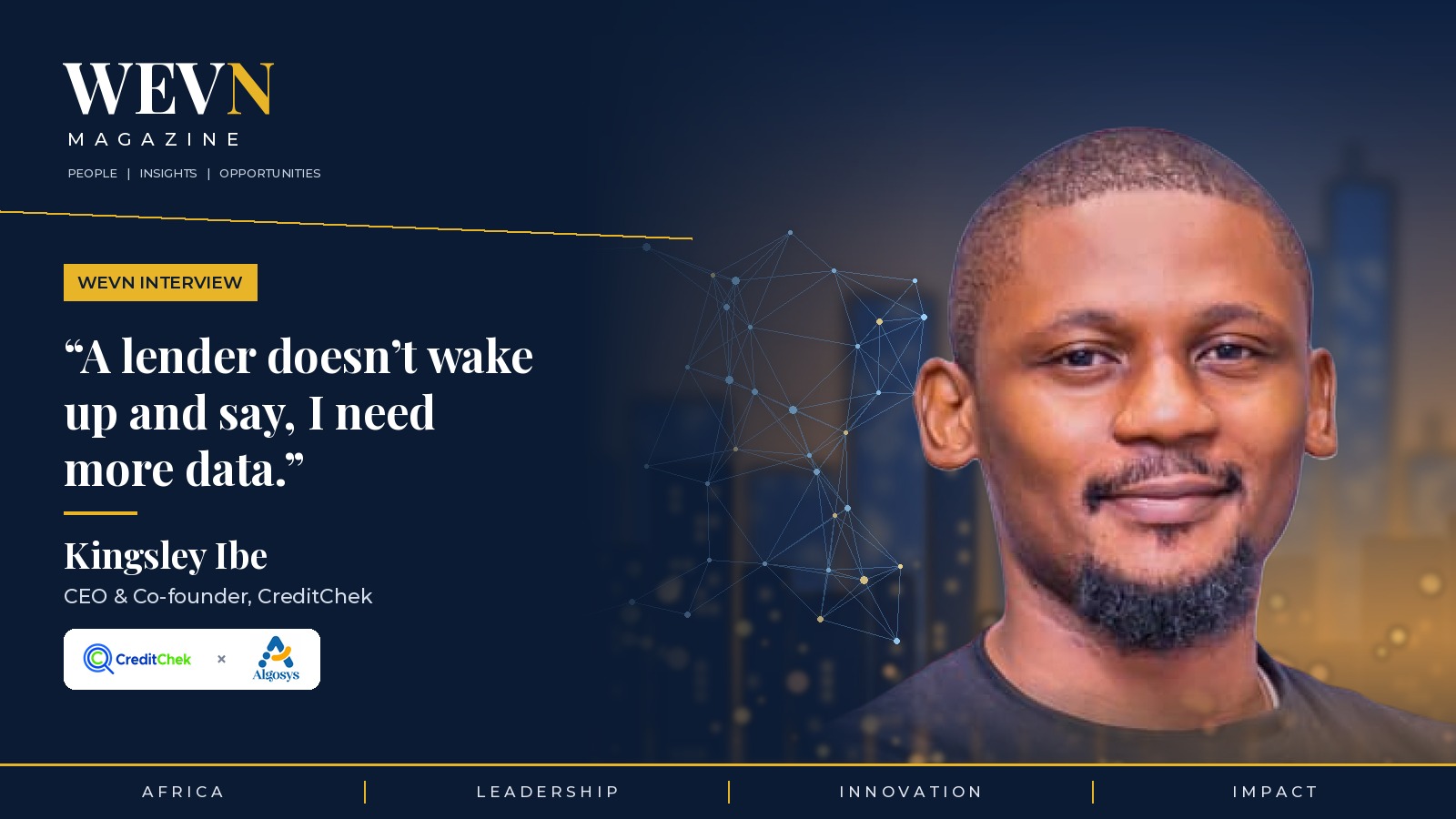
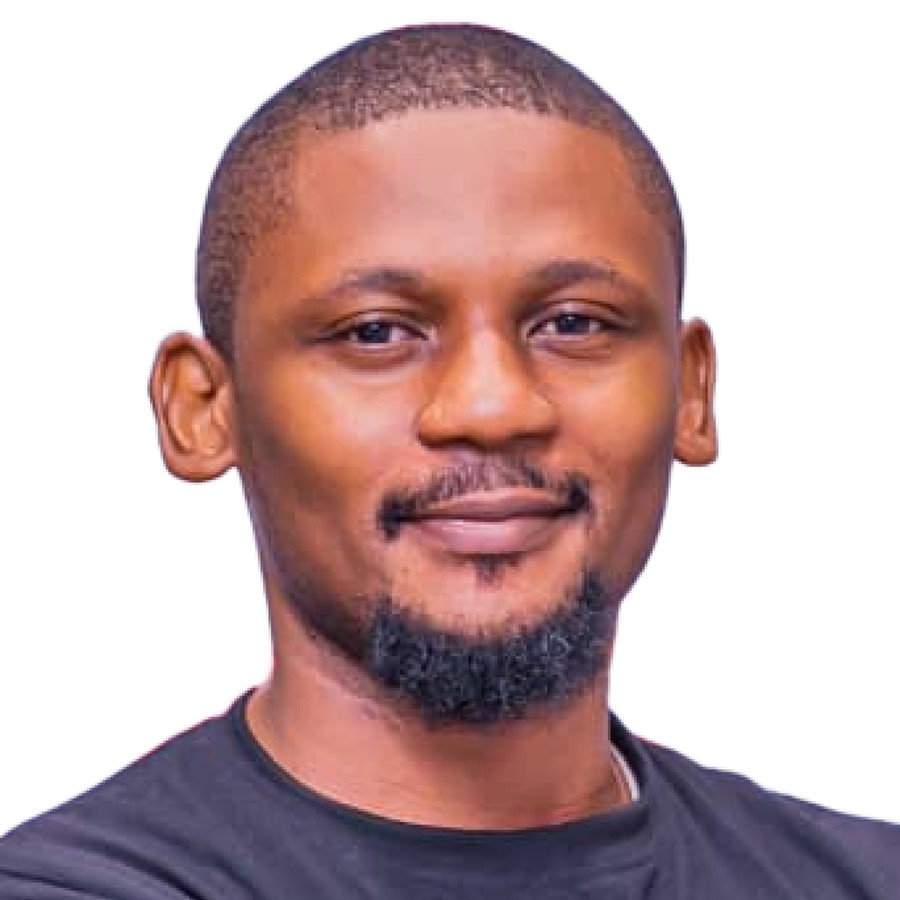
In September 2026, Nigerian credit infrastructure company CreditChek acquired Algosys, a Ugandan startup that builds core banking software for lenders, savings and credit cooperatives (SACCOs) and microfinance institutions. Terms were not disclosed. The deal is CreditChek's first step into East Africa, and it earned Ibe a place on the WEVN List for Q3 2026.
Ibe founded CreditChek in 2021 with CTO Lionel Orishane. According to TechCabal, the company has processed more than $60 million in credit applications and is profitable in Nigeria.
WEVN put eight questions to Ibe in writing. His answers have been lightly edited for length and clarity.
Why acquire Algosys rather than build your own presence in Uganda?
"We considered building from scratch, but acquiring Algosys gave us several things that would have taken much longer to develop independently: an existing product, local market knowledge, relationships with financial institutions, transaction history, and an operating footprint in Uganda.
"Algosys had already built a strong foundation in just two years, serving 22 financial institutions, processing more than 10 million transactions and facilitating over 10,000 loans. That was valuable because we weren't acquiring an idea; we were acquiring an operating business with real usage and real customer relationships.
"The other important consideration was strategic fit. Algosys sits much closer to the core banking and lending-management layer, while CreditChek has historically focused more on credit, income and identity intelligence. Those capabilities are highly complementary. Our ambition is to move beyond being just another provider in the lending stack. We want to build the infrastructure that connects the different stages of the lending lifecycle, from identity and financial data to underwriting, origination, loan management and eventually recovery. Building that entire stack organically, market by market, would take significant time and capital."
How has your view of the problem changed since you started CreditChek?
"When we started CreditChek, the immediate problem we were solving was access to reliable credit data. But as we worked more closely with lenders, we realized that data is only one part of the problem.
"A lender doesn't wake up and say, I need more data. They need to make a good lending decision. That decision requires multiple things to work together: knowing who the customer is, understanding their income and financial behaviour, assessing their creditworthiness, originating the loan, managing repayments, monitoring the portfolio and eventually recovering the money. If you only provide a credit report in the middle of that process, you are solving one piece of a much larger problem.
"That's why our thinking has evolved from 'How do we give lenders more data?' to 'How do we give lenders the infrastructure to make better decisions?' That is where the Algosys acquisition becomes particularly strategic."
What changes for the 22 institutions that already use Algosys?
"Our first priority is continuity. The 22 financial institutions that already trust Algosys have built their businesses around the platform, so the acquisition is not an excuse to disrupt what is already working. We want customers to see this as an upgrade, not a reset.
"In the immediate term, customers should expect business as usual. Their existing contracts, relationships, products and workflows will continue, and we are taking a deliberate approach to integration so that we don't introduce unnecessary disruption. Where things will change is in what we can build on top of that existing foundation."
How do you adapt one platform to markets as different as Uganda, Kenya and Francophone Africa?
"Every market has its own financial behaviour, regulatory environment, data infrastructure, payment rails and lending culture. Even where two countries have similar levels of mobile-money penetration or similar financial products, the underlying behaviour can be very different. Our approach is therefore local infrastructure, common technology principles: we want to build a core platform that can scale across markets, but the data sources, underwriting models, integrations and workflows sitting on top of that platform need to be localized.
"In Uganda, for example, mobile money plays a fundamentally important role in how people transact and access financial services. That means good credit infrastructure in Uganda needs to understand financial behaviour beyond traditional bank accounts and bureau records. Kenya has its own dynamics, particularly around mobile money, digital lending and the maturity of its financial ecosystem. And when we move into Francophone Africa, we have to account for differences in language, regulation, bureau infrastructure, payment systems and how financial institutions operate.
"So we're thinking about localization at the data and decisioning layer, rather than trying to standardize the customer. The long-term architecture is something like this: one infrastructure layer; multiple localized intelligence layers; market-specific lending decisions."
CreditChek reached profitability in Nigeria. What discipline did that require?
"Reaching profitability in Nigeria was important to us because it proved that we could build a business that creates real value for customers without depending indefinitely on external capital.
"The biggest discipline was learning to distinguish between growth and healthy growth. We became much more deliberate about what we spent money on, which markets we entered, which products we invested in and, most importantly, whether an initiative had a clear path to revenue or strategic value. We had to resist the temptation, particularly as a startup, to build everything at once.
"We also focused heavily on unit economics and customer value. If a product doesn't solve a meaningful problem for a customer and they aren't willing to pay for it, scaling it doesn't make the underlying business stronger. That discipline is particularly important now that we're expanding."
What were the hardest decisions along the way?
"First was turning down an investment because we didn't feel the expectations of the investor aligned with our long-term goal. The second was choosing long-term survival and focus over short-term opportunity: deciding what not to build and which opportunities not to pursue, even when they looked attractive.
"As a startup, especially in fintech, there is always another opportunity: another market, another product, another partnership, another customer asking you to build something specific for them. Early on, it is tempting to say yes to everything because every opportunity feels important. Over time, we learned that saying yes to everything is another way of losing focus."
What would you tell a founder considering an acquisition to enter a new market?
"Don't acquire a company simply because it gives you a presence in another market. Acquire a capability that would take you significantly longer or cost you significantly more to build yourself. For us, the Algosys acquisition wasn't just about entering Uganda. It gave us an existing product, local market knowledge, relationships with financial institutions, transaction history, and an operating foundation that would have taken years to build from scratch."
What does success look like for CreditChek in three years?
"Becoming one of Africa's leading credit infrastructure companies: the trusted data and intelligence layer that lenders rely on to make faster, safer and more inclusive credit decisions. Powering risk assessment, alternative data scoring, loan origination, portfolio management and decisioning for every major financial touchpoint on the continent. We want to have expanded beyond Nigeria and Uganda into key African markets, with strong coverage across both West and East Africa."
Related on WEVN: CreditChek buys Uganda's Algosys, betting that lenders want more than data · The WEVN List, Q3 2026
Photo: courtesy of Kingsley Ibe / CreditChek. Logos: CreditChek and Algosys.
This is an editorial interview. CreditChek did not pay for this coverage.
- #interview
- #fintech
- #Africa
Keep reading
Related Articles
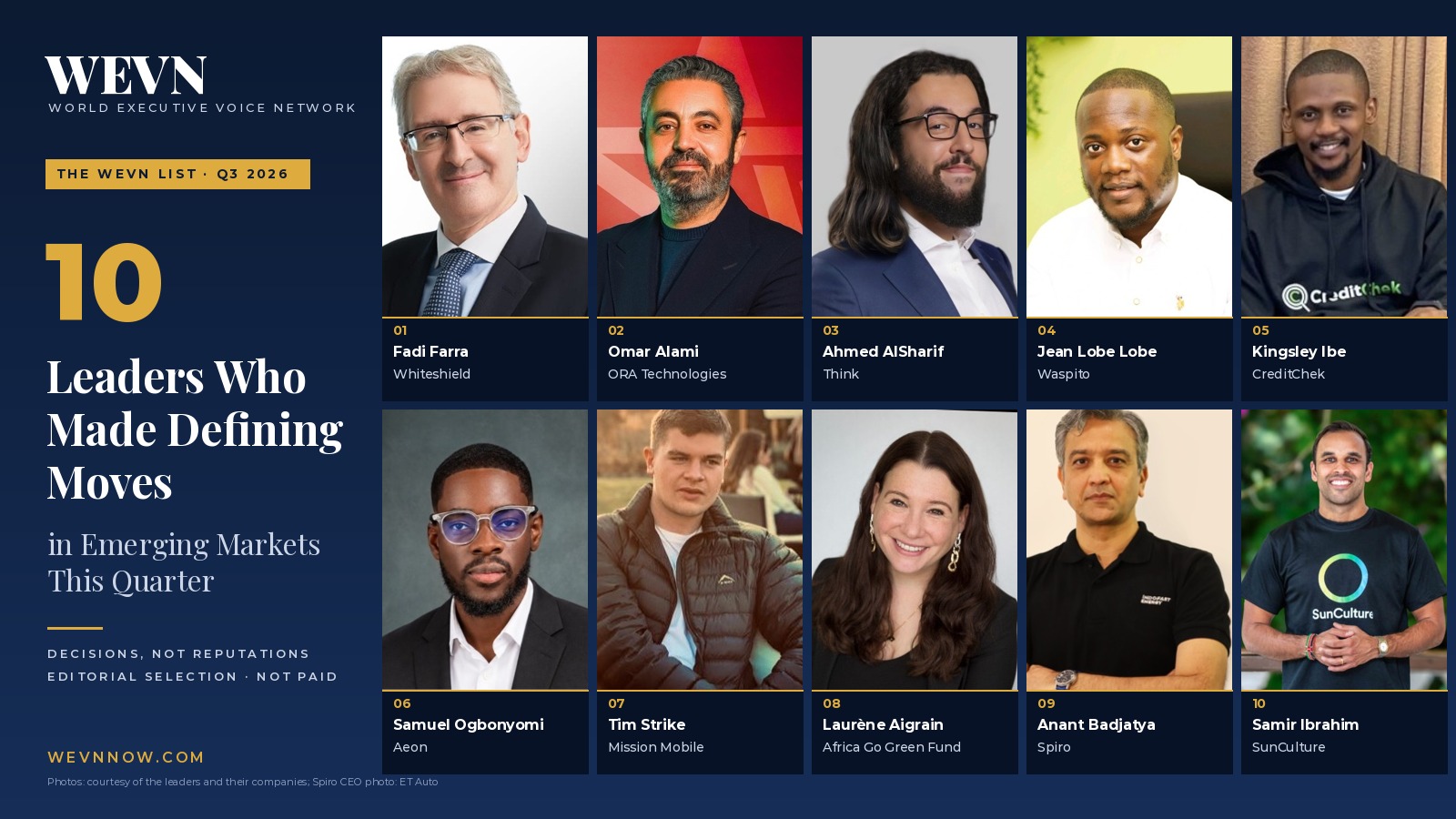
10 Leaders Who Made Defining Moves in Emerging Markets This Quarter
WEVN's quarterly list recognises decisions, not reputations. Each leader below made a verifiable move between July and September 2026 that says something about where business in Africa and the Middle East is heading.
11 min read
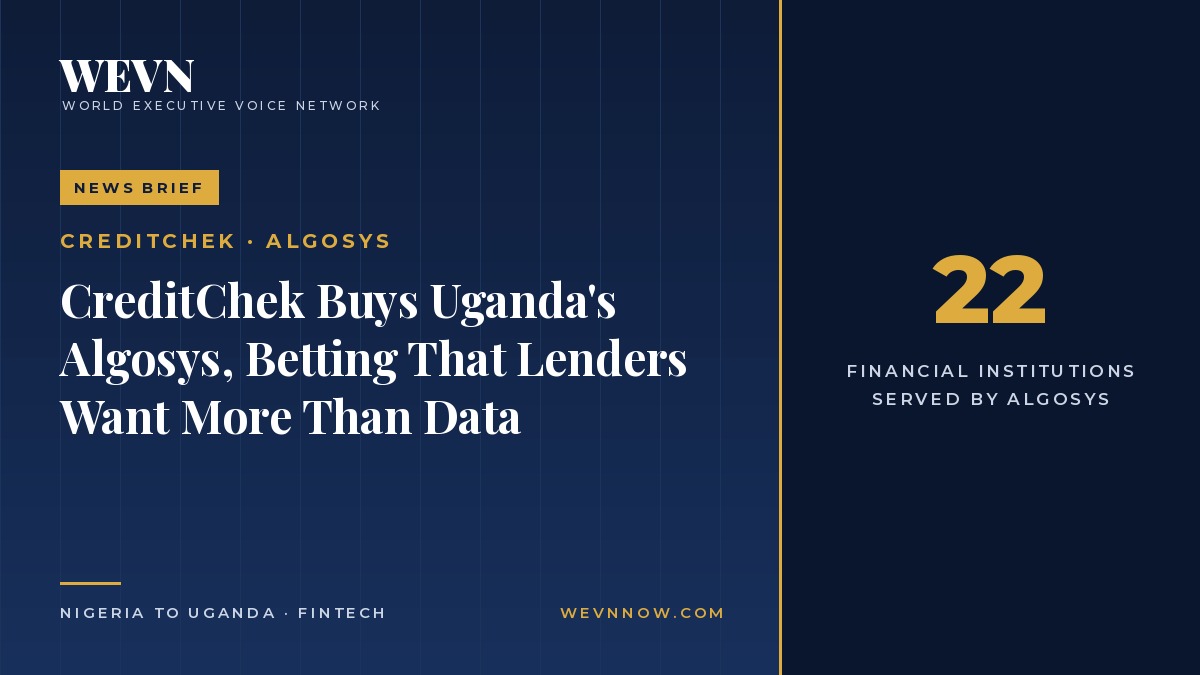
CreditChek Buys Uganda's Algosys, Betting That Lenders Want More Than Data
The Nigerian credit infrastructure company is using an acquisition, not a greenfield launch, to enter East Africa.
1 min read
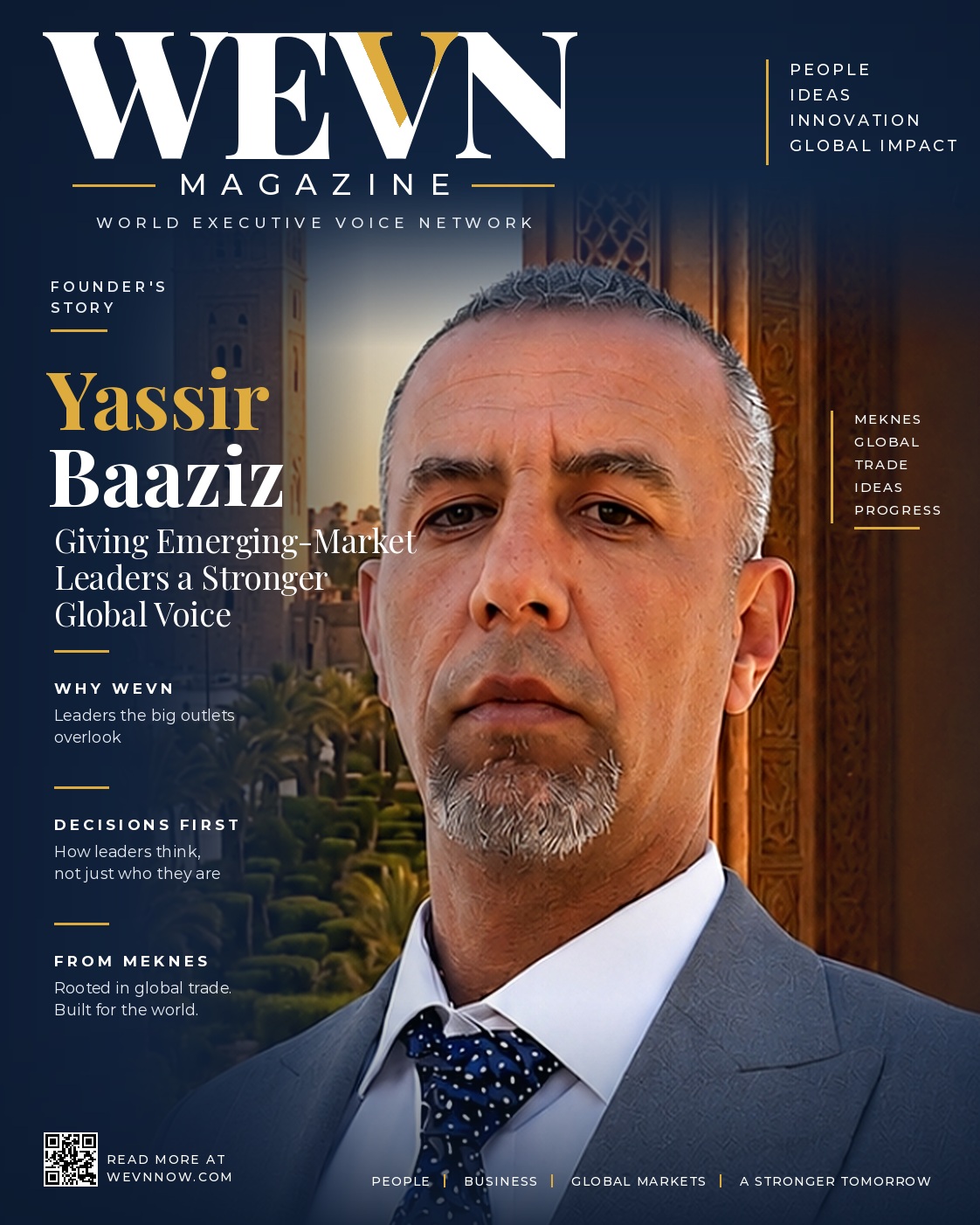
Yassir Baaziz Built His Career on Global Trade. Now He Is Building a Voice for the Leaders Who Drive It.
The founder of WEVN on why the executives running the world's fastest-changing markets deserve better coverage, and why decisions matter more than biographies.
3 min read
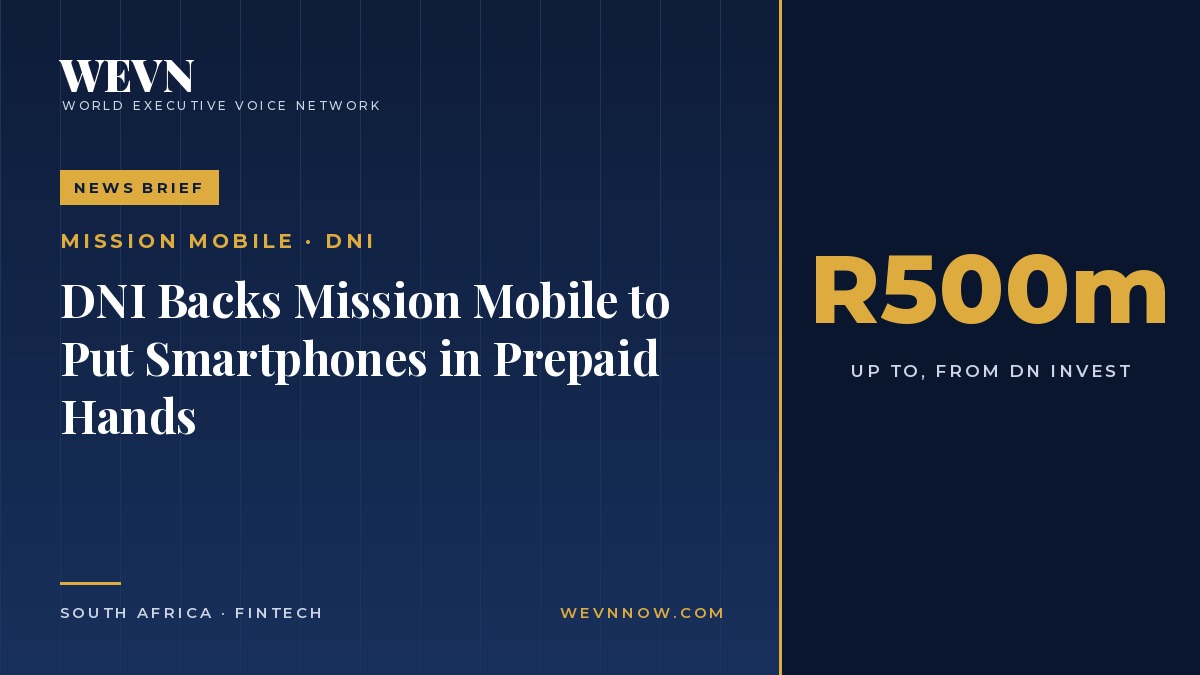
DNI Backs Mission Mobile With up to R500m to Put Smartphones in Prepaid Hands
The Johannesburg fintech, founded in 2023, is financing devices for customers that traditional credit checks tend to miss.
1 min read