
Top 10 Leaders Shaping Global Business in 2026
Our annual roundup of the executives whose decisions this year will still be visible in their industries in five. Selected by the WEVN editorial desk for operating judgement rather than profile.

WEVN Editorial Desk
Editorial
21 min read

Sponsored feature. This feature was published in partnership with its subject through WEVN’s Get Featured programme. WEVN wrote and edited the piece. Payment secures publication, not editorial endorsement.
Lists like this one usually reward visibility. Ours tries to reward judgement.
The WEVN editorial desk selected these ten leaders on a single question: whose decisions in the past eighteen months will still be shaping their industry in five years. Some run large organisations. Several do not. What they share is a willingness to make an unpopular structural call and then stay to run it.
Each profile below was built from interviews, public materials and, where noted, a paid partner feature arranged through WEVN's Get Featured programme. Selection for this list is editorial and paid placement does not determine rank; where a placement fee applied, it is disclosed in that entry.
Adaeze Okonkwo
Founder and Chief Executive, Kestrel Logistics

The last two hundred kilometres are where the margin lives, and where everybody stops paying attention.
There is a version of Kestrel Logistics that never gets built: the one where Adaeze Okonkwo subcontracts last-mile delivery like everyone else in her category and spends the next decade apologising for a service she does not control. She looked at that version early and refused it.
Kestrel now moves freight across fourteen markets in West Africa and the Gulf, and it does so by owning more of the chain than a comparably sized competitor would consider sane. Regional dispatch desks, an in-house routing platform built after two vendor systems failed on the region's exception rate, a fleet mix skewed toward company-owned trucks in the corridors that matter most. None of it was the cheap decision. All of it is why Kestrel holds delivery windows where asset-light operators cannot commit to one.
The clearest evidence of how she runs the company is what she still does personally. Every Monday, Okonkwo reads the previous week's routing exceptions herself, not a summary of them. She has let her operations team redesign the format of that review twice. She has never let them take the meeting off her calendar. "The exceptions are the only honest description of your business," she says. "Everything else is a number that has already been rounded."
That instinct extends to growth. Kestrel has turned down two of its last five expansion opportunities, in both cases because the corridor economics worked on paper while the operating reality on the ground did not. Okonkwo has run the alternative before, at a previous employer, and describes the experience plainly: winning a contract and then spending three years apologising for the service costs more than the revenue is worth, and it costs in a currency the company cannot get back — the belief of its own operators that the company means what it says.
Her advice to founders building in markets where the standard playbook does not hold is characteristically unsentimental. Stop looking for the version of the plan that fits, she says. Write down what actually happens on your route on a bad Tuesday, and build for that instead. The playbook, in her account, was written by people who never drove it.
Kestrel is privately held and profitable, and Okonkwo has said publicly that an initial public offering is not on the company's five-year horizon. What is on it: five more corridors, a second in-house platform for customs documentation, and, if the last decade is any guide, a founder who still reads the exceptions herself.
This entry was published in partnership with its subject through WEVN's Get Featured programme.
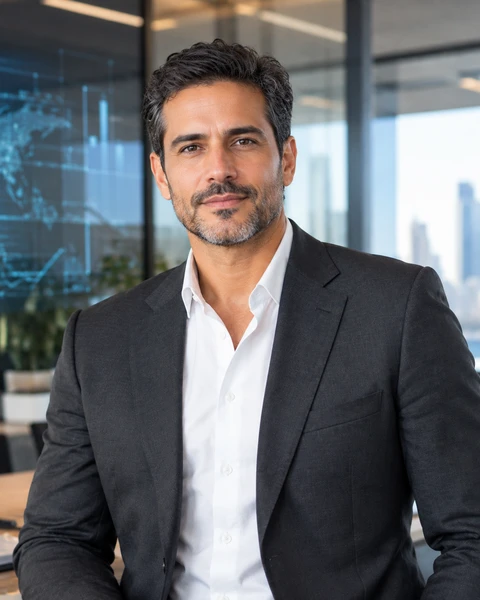
Rafael Mendoza
Chief Technology Officer, Meridian Data
If the team that builds the pilot also chooses what it's measured against, you haven't run an experiment. You've run a demo with extra steps.
Between 2023 and 2025, Meridian Data ran nineteen artificial intelligence pilots. Three of them reached production. Rafael Mendoza, the company's chief technology officer, does not describe that ratio as a failure of the technology. He describes it as a failure of governance — his own, in particular, since the budget line that made approval easy sat on his desk.
The document he built in response is one page long and has, in his telling, been resented by nearly every team that has been asked to complete it. It asks three questions of a pilot before it receives further funding. Who owns the workflow once the pilot team has moved on — not who sponsors it, but who is accountable when it produces a bad output on an ordinary Tuesday. What was the baseline before anyone knew a model was coming, recorded by the operating team rather than the engineering team, so the pilot cannot grade its own homework. And what a confidently wrong answer actually costs, since Mendoza's experience is that most teams can describe the upside of a system in detail and struggle to say anything precise about its failure mode.
Since the gate went in, Meridian has run six further pilots. Four reached production. Two were deliberately stopped, and Mendoza treats the stops as the more instructive result of the two outcomes. A stopped pilot used to read as a write-off inside the company. Now it reads as the system working as intended — a quarter spent learning that a workflow was not ready is inexpensive. Deploying into a workflow that was not ready is not.
He is not, he is careful to say, sceptical about the underlying models. He is sceptical about organisations that treat model capability as the binding constraint on deployment, when in his experience the binding constraint is almost always the readiness of the process the model gets dropped into. That distinction shapes the conversations he now has with counterparts at other companies, and he describes the same pattern recurring in nearly all of them: the conversation opens with a question about which model or which vendor, and stalls the moment he asks who owns the output. The pause, he says, is the whole problem — the model can be swapped out in an afternoon, but nobody in the room has agreed to be accountable for what it says.
His advice to other technology leaders is deliberately unglamorous. Run fewer pilots. Write the baseline down before engineering starts. Put a name on the door of every system before it ships. None of it is an interesting thing to say in a room full of people excited about a new model. All of it, in Mendoza's account, is the reason three pilots shipped instead of zero.
Hannah Lindqvist
Chief Executive, Norvind Industrial

The first announcement is the most expensive one you will ever make, because it is the one you know the least about.
Hannah Lindqvist was appointed chief executive of Norvind Industrial four days after her predecessor resigned, in a month that had already cost the company two board members and a major supply agreement. Every instinct in the organisation, and most of the advice she received from outside it, said to announce a direction immediately. She said almost nothing for three weeks.
What she did instead was publish a schedule: three weeks of site visits, a fixed date on which she would set out the plan, and an explicit commitment that nothing structural would change before then. Several people around her described it at the time as a failure of decisiveness. Lindqvist describes it differently. The schedule was the message, she says — it told the organisation that she was not going to pretend to know the answer yet, and that she was not going to leave people guessing for six months either.
The three weeks changed the plan. The lost supply agreement had been treated at board level as a straightforward commercial failure. On the floor, across three separate plants, she heard the same account from people with no reason to coordinate their story: a quality escalation process that took eleven days to reach anyone with the authority to act on it. The commercial team had not lost the contract through negligence. They had been handed a problem eleven days too late and asked to save it. Had Lindqvist announced a commercial restructuring in her first week, as several advisers had recommended, she would have removed the people closest to being right.
She is candid that the approach has a cost, and that the cost was runway rather than confidence. Norvind had roughly nine months of cash cover when she took over; she has said since that a business with two months would have forced worse decisions, faster, because that would have been the job. The luxury she had access to was not certainty. It was time to go and look, and she is careful to say that leaders should be honest with themselves about which one they actually have.
The quality escalation path now runs under forty-eight hours. Norvind has not lost a major supply agreement since. Lindqvist's own test for a leader stepping into a crisis is a question, not a rule: ask yourself what you would need to know to be sure, then ask how long it would actually take to find out. Very often, she notes, the honest answer is weeks rather than months — and very often nobody checks, because everyone in the room is too busy performing decisiveness to ask.
Devika Raman
Founder and Chief Executive, Aster Capital

There's a difference between a business that has failed to pay and a business that has simply never been asked.
Devika Raman keeps a rejected loan application in her desk drawer. It belonged to a fourteen-year-old, family-run packaging business with a full order book, consistent receivables and no formal credit file to speak of. Every commercial scoring model Aster Capital could buy said no. Raman drove out to see the business herself. What she found was a company with more demand than it could fulfil and a paper trail too thin for an algorithm trained on a different kind of borrower to recognise.
That gap between an unproven business and an unscored one is the premise Aster is built on. Raman spent nine years in corporate credit before founding the company, and her argument is not that conventional scoring is wrong so much as narrow — trained on a borrower profile that a large share of genuinely creditworthy businesses have simply never fit, with the absence of evidence then read by the model as risk.
Aster's underwriting is deliberately more expensive than a bank's. Above a set loan threshold, an underwriter visits the business in person, which raises Aster's cost per loan and, so far, has lowered its loss rate on this specific kind of borrower enough to justify the difference. Raman is precise about which claim she is making: Aster is not cheaper than a conventional lender, it is more accurate about a borrower conventional lenders are not built to read.
The most predictive signal her underwriters have found did not come from a spreadsheet. It is customer concentration, and specifically how an owner talks about it unprompted. An owner who volunteers the percentage of revenue tied to their largest customer, and can describe what they are doing to reduce it, represents a materially different risk to one who has to stop and think. Raman has resisted turning that observation into a scored field, on the grounds that formalising it would teach applicants the expected answer and destroy the thing that makes it useful — it works precisely because it is a conversation and not a checkbox.
Aster's binding constraint today is the underwriting team rather than demand, and Raman has turned down two funding conversations that would have required deploying faster than her hiring could support. She has watched other lenders take growth capital and discover, a year or two later, that the only way to deploy it at that speed was to relax the process that made them good in the first place — a change that rarely shows up in the numbers for a year, and then shows up all at once. Her stated ambition is narrower than the size of the opportunity in front of her: to be the lender a good business with a thin file can get a straight answer from. Not a large idea, she says. Just one somebody has to actually do.
Tomas Albrecht
Chairman, Halden Group

The question is not whether you are busy. It is whether the most important thinking in your week happened on purpose.
Tomas Albrecht chairs three companies across industrial services and specialist manufacturing, and he holds four hours of every working day that no one — including him — is permitted to book. He is dismissive of the suggestion that this is a wellbeing practice. It is, in his account, the only structural reason three companies get a chairman rather than a very expensive bottleneck reacting to whichever email arrived most recently.
The four hours follow a fixed internal pattern: two hours on whichever of the three companies is currently hardest, one hour reading material unrelated to any of them, and one hour left genuinely unstructured. That last hour draws the most scepticism from people he has described the system to, and he defends it most directly. A calendar with every minute allocated in advance permits only the thoughts the allocation allows for, in his view — several of the more useful conclusions he has reached in recent years began as an hour with no assigned task at all.
He pairs the calendar discipline with a rule about travel, batching flights into fixed weeks rather than distributing them across the month. His reasoning is arithmetic rather than a comfort preference: a single flight on a given day does not cost the company that day, it costs the afternoon before and most of the day after, as attention shifts to preparation and then to recovery. Four flights spread across a month therefore cost closer to a full week of degraded attention than four isolated days, whereas the same four flights batched into one travel week cost, in his estimate, something closer to the week it actually occupies.
Albrecht does not present the system as costless. He has stepped back from two advisory relationships he valued, and he is candid that he is less available to people earlier in their careers than he was before adopting the discipline — a real loss, in his own description, not one he dresses up as a trade he is pleased with. His argument is narrower than "this schedule has no cost." It is that the schedule works because he says no to things that would otherwise deserve a yes, and that anyone claiming an optimised calendar with no sacrifices attached is either not being honest or not doing very much.
Daniel Kamanzi
Chief Executive, Umoja Power Holdings

A grid that fails quietly in the villages furthest from the capital is still a grid that failed. We stopped averaging that away.
Daniel Kamanzi inherited a reliability statistic at Umoja Power Holdings that looked, on a national basis, respectable: average uptime across the grid the company operates sat comfortably ahead of the regional benchmark. It was only when he broke the number down by district that he found what the average had been quietly absorbing — reliability in the capital was excellent, and reliability in the districts furthest from it was not, by a margin the national figure made easy to overlook.
His response was to stop reporting the national average as the company's headline reliability metric at all, replacing it with the worst-performing district's number as the figure the board and regulators saw first. The change was, by his own account, unwelcome to a commercial team that had spent years pointing to the national average in investor conversations. Leading with the worst number rather than the best one is not a natural instinct for a utility trying to raise capital, and Kamanzi's board asked him more than once whether the disclosure was necessary rather than simply honest.
He held the position on the argument that a national average was, functionally, a way of letting well-served districts subsidise the appearance of service to poorly served ones without anyone having to notice or fix it. Once the worst-district number became the figure that mattered, capital allocation inside the company shifted toward the districts previously treated as acceptable losses within the average — substation upgrades and maintenance crews moved toward the geography the old metric had made invisible.
The worst-performing district's uptime has closed roughly two-thirds of the gap to the national figure over eighteen months, and the company's overall national average, no longer the headline number but still tracked, has continued to improve alongside it rather than at its expense — evidence, in Kamanzi's reading, against the assumption that attention paid to the weakest part of a network comes at the cost of the strongest.
Kamanzi is direct that the disclosure was, in the short term, a harder story to tell investors than the one the national average allowed. His longer view is that a utility whose reported numbers survive being broken down by geography is a more investable one than a utility whose numbers only look good in aggregate, and that the districts a company is willing to name as its worst are a more reliable signal of its actual operating discipline than the districts it chooses to lead with.
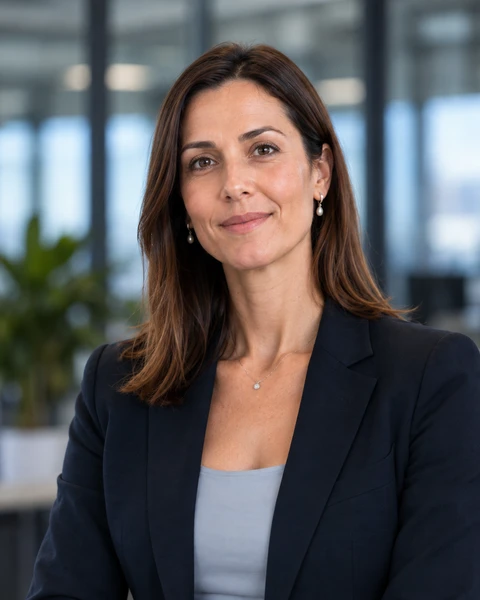
Elena Petrovic
Chief Operating Officer, Dravograd Precision
Every defect we ever traced backward stopped at the same place: a shift change where nobody had actually handed anything over.
Elena Petrovic spent the first six months in her role at Dravograd Precision doing something her production managers considered beneath a chief operating officer: tracing individual quality defects backward, one at a time, to find where in the process each one had actually originated. The pattern that emerged did not point to a machine, a supplier or a specific operator. It pointed to shift changes, where responsibility for an in-progress batch passed from one team to another with no structured handover beyond a verbal note that varied by whoever happened to be on the floor.
Her fix was a mandatory written handover log at every shift change, recording the exact state of in-progress work, any deviation observed in the preceding shift, and an explicit sign-off from both the outgoing and incoming shift lead. The proposal met resistance she had not fully anticipated: experienced operators, some with a decade or more on the floor, read the requirement as an implication that their informal handovers had been inadequate, which was, in a narrow technical sense, exactly what the defect data showed, and precisely the reading Petrovic had hoped to avoid provoking directly.
She spent the rollout period on the floor at shift-change hours herself rather than mandating the log from an office, a decision she says cost her the better part of a quarter but changed how the requirement landed — a written standard introduced by someone visibly present for the handovers it governed read differently to operators than the same standard issued by memo. Defect rates traceable to shift-change handoffs fell by more than half within the first two quarters after full rollout.
Petrovic is careful not to claim the log eliminated the underlying problem so much as made it visible at the moment it was still correctable, rather than three process steps later when the cause had become difficult to reconstruct. She has since applied the same handover discipline to equipment maintenance transitions, on the observation that any point where accountability for something in-progress changes hands unrecorded is a point where a defect can enter unnoticed — a principle she considers more transferable than any specific tooling decision she has made in the role.
Omar Al-Farsi
Managing Director, Qanat Ports Investment

We were financing throughput projections nobody on our side had actually stress-tested against a single bad quarter.
Omar Al-Farsi changed how Qanat Ports Investment underwrites port and terminal infrastructure after reviewing a decade of the fund's own throughput forecasts against what the financed assets actually handled once operational. The forecasts, produced by the operating partners bidding for each project, had cleared Qanat's investment committee consistently for years. What Al-Farsi's review found was that the committee had never separately stress-tested those projections against a genuinely bad quarter — a regional trade disruption, a competing port opening nearby, a shipping alliance rerouting — treating the operator's base case as the number to underwrite against rather than as one scenario among several.
His response was to require every infrastructure proposal to clear a specific downside case before base-case returns were even discussed at committee: a quarter of throughput at a defined percentage below the operator's own worst historical comparable, with the project required to service its debt through that quarter without a covenant breach. Several proposals that would previously have advanced easily failed to clear the downside case and were declined or restructured with more conservative leverage, a change that made Qanat's near-term deployment pace considerably slower than peers underwriting to base case alone.
The discipline was, in Al-Farsi's account, difficult to defend inside the fund during a period when competing capital was moving faster and winning deals Qanat's committee had passed on. He held the position through two disruptions in the sector — a regional trade rerouting and a major operator's insolvency — that stress-tested his own downside assumptions in practice rather than on paper, and Qanat's portfolio serviced its debt through both without a covenant breach, a result he attributes directly to underwriting the bad quarter rather than the operator's forecast.
He is candid that the approach has a real opportunity cost, measured in deals won by funds willing to underwrite more optimistically, and that defending a structurally slower deployment pace to Qanat's own limited partners required a different kind of conviction than defending the deals themselves. His standing view is that an infrastructure fund's downside case is a decision the fund is responsible for making itself, and that outsourcing it to the operator raising the capital is underwriting a forecast rather than underwriting a risk.
Sophia Marini
Chief Executive, Marini Atelier Group

We could have doubled output by loosening the standard. We decided that was the one lever we would not pull.
Sophia Marini took over Marini Atelier Group at a moment when demand for its handmade leather goods was outpacing the workshop's output by a wide and growing margin, and every consultant the family business brought in recommended the same fix: relax the apprenticeship-trained craftsmanship standard that limited how quickly new artisans could be brought to full production speed, in favour of a faster-trained, more segmented production process closer to the industry standard.
Marini's decision was to hold the standard and grow output more slowly than demand instead, extending the atelier's apprenticeship pipeline rather than shortening it, and accepting order backlogs that in some product lines ran to several months. The commercial argument against her position was straightforward and, in the short term, correct: competitors willing to segment production and train faster were capturing customers Marini Atelier's waitlist was actively losing to them during the transition period.
Her reasoning was that the craftsmanship standard was not a cost to be optimised against output but the actual asset the business was selling, and that a faster-trained, segmented production process would produce goods indistinguishable on a spec sheet from the atelier's current output while being, in practice, a different and more replicable product — one that competitors with more capital could then out-produce Marini Atelier at its own faster standard. Holding the slower standard was, in her account, the only version of the business a larger competitor could not simply out-resource.
The backlog has become, counterintuitively, part of the brand's commercial positioning rather than purely an operational problem to be solved, with a portion of clients now treating the wait itself as evidence of the standard being real rather than as a deterrent. Marini is careful not to claim the strategy would generalise to a business without a genuine craftsmanship premium to protect, and her advice to peers considering a similar trade-off is to be honest about which category they are actually in before they decide what to hold the line on.
Li Wei
Chief Executive, Hengda Precision Electronics

Every part we qualified twice as fast and shipped once as often would have been the wrong trade.
Li Wei slowed his own company's component qualification process at a point when Hengda Precision Electronics was under direct commercial pressure to speed it up, after a client's field failure traced back to a component that had passed Hengda's standard qualification testing but had not been tested against the specific thermal cycling conditions of its actual end use. The qualification process had been, by industry standard, thorough. It had not been designed around how the part would actually be used once it left the factory.
His response extended the standard qualification window and added use-case-specific testing tailored to each major client's actual operating environment, a change that lengthened time-to-qualify for new components by a meaningful margin at a moment when several of Hengda's largest clients were explicitly pushing suppliers to qualify faster in order to compress their own product development timelines. The pressure to reverse the decision came from inside the company as much as from clients, with Hengda's own sales organisation arguing that a longer qualification window was costing the company deals to faster-qualifying competitors.
Li Wei's position was that a qualification failure caught in testing cost Hengda a delayed shipment, while a qualification failure caught in a client's field deployment cost Hengda the client relationship entirely — an asymmetry he judged the sales organisation's faster-qualification argument was not actually pricing in. Field failure reports traceable to qualification gaps fell substantially in the two years following the change, and Li Wei notes that the clients most frustrated by the slower qualification window in year one have, without exception, become the clients most likely to cite Hengda's qualification rigor as the reason they have not moved production elsewhere.
He is candid that the extended qualification window has cost Hengda specific deals to competitors willing to qualify faster and accept the resulting field risk, and that defending the slower process to his own commercial team required repeating the same argument in different forms for longer than he expected it to take. His view, stated plainly to new hires in the qualification function, is that a qualification process only exists to catch the failure the client would otherwise catch first, and that any pressure to shorten it should be evaluated against that single question rather than against a competitor's stated turnaround time.
How this list was made
The desk starts with nominations from WEVN contributors and readers, then applies three filters. The leader must have made a specific, identifiable decision rather than presided over a good year. The decision must have carried real internal cost. And they must still be in the role, running it.
Nominations for the 2027 list are open. Write to editor@wevnnow.com with the decision, not the biography.
- #top 10
- #leadership
- #2026
Keep reading
Related Articles

Top 10 Technology Operators to Watch This Year
Not the founders with the largest rounds. The operators quietly making the infrastructure, governance and deployment decisions that the rest of their sectors will copy within two years.
14 min read

Mid-Market Capital Is Quietly Returning to Corridors Large Funds Left
Sponsors who spent two years concentrating on core markets are reopening conversations in secondary corridors, and the terms on offer look different to the ones that were available before the pullback.
1 min read

Boards Are Tightening Oversight of AI Spending, and Asking a Harder Question
Directors who approved exploratory AI budgets on strategic grounds are now asking who is accountable for a wrong output. Several technology chiefs say it is the most useful question their boards have asked.
1 min read

The Journey of Adaeze Okonkwo: Building a Logistics Network Across Fourteen Markets
The Kestrel Logistics founder started with three trucks and a spreadsheet. She now moves freight across fourteen African and Gulf markets, and she still reviews the routing exceptions herself every Monday.
3 min read